
Management Systems

ISO 9001: 2026

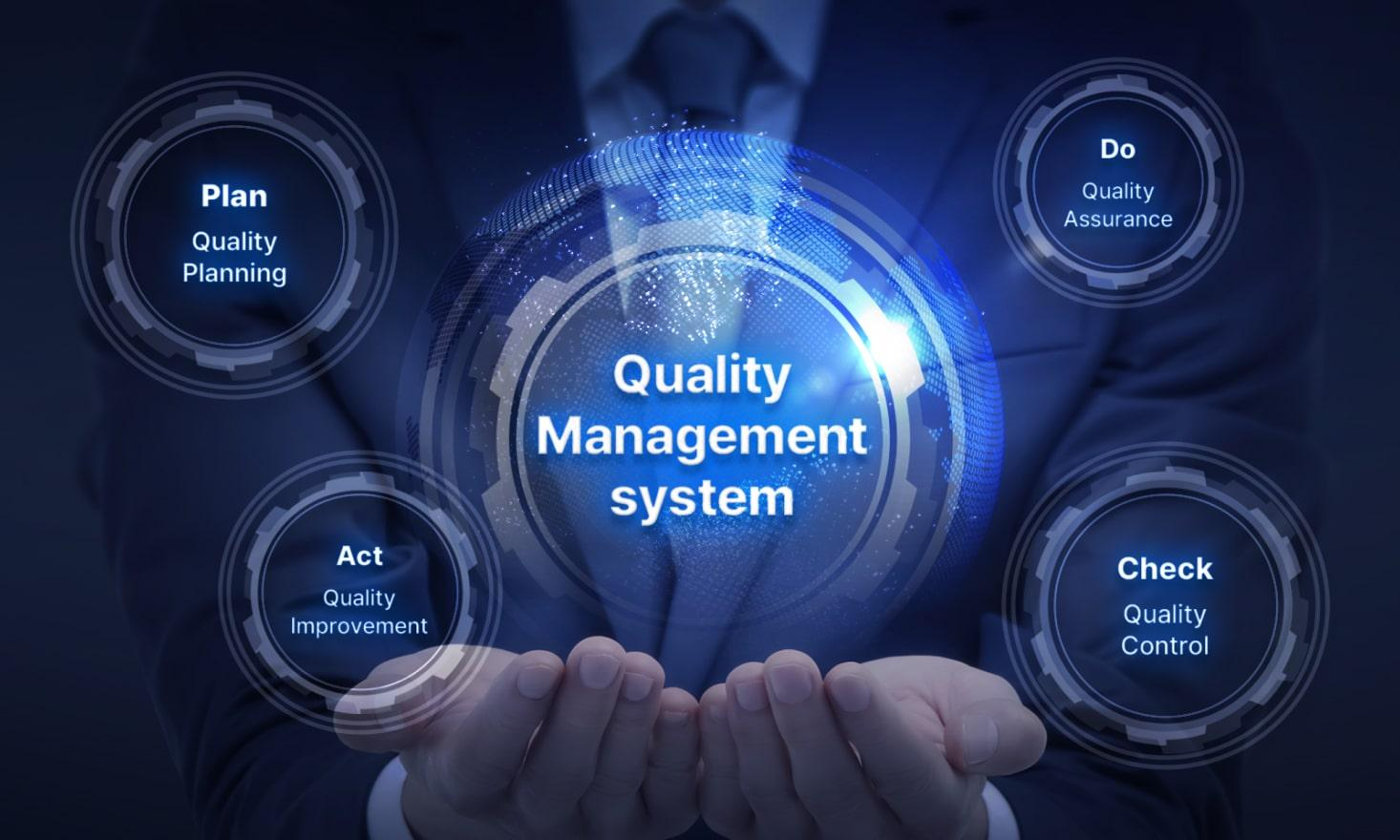
Quality Management System

What is ISO 9001: 2026?

ISO 9001: 2026 provides a systematic approach for establishing, implementing, maintaining and continually improving a Quality Management System.

It helps organizations manage their processes effectively, understand customer and stakeholder requirements, address risks and opportunities, monitor performance and drive continual improvement.

ISO 9001 is applicable to organizations of all sizes and industries, including manufacturing, engineering, automotive, construction, IT, healthcare, food, logistics, trading and professional services.
ISO 9001: 2026 Quality Management System

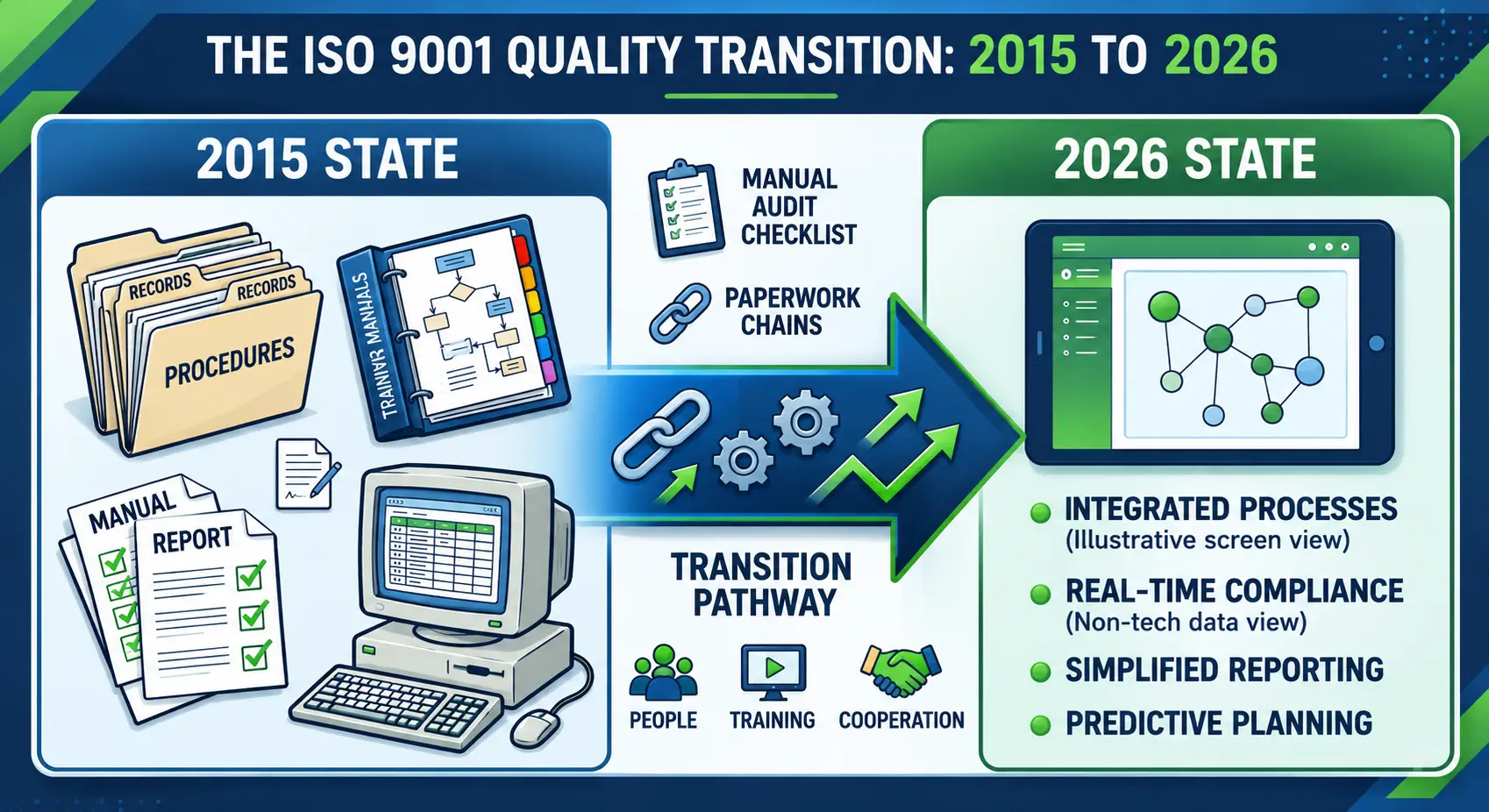
ISO 9001: 2015 to ISO 9001: 2026 – Key Changes

ISO 9001: 2026 is expected to build on the established requirements of ISO 9001: 2015 while reflecting evolving business conditions, stakeholder expectations and modern quality management practices.

The revised standard is expected to place greater emphasis on organizational context, strategic alignment, stakeholder expectations, risk and opportunity management, performance evaluation, data-driven decision-making, competence, organizational knowledge and relevant external issues, including climate change where applicable.

The core principles of customer focus, leadership, process approach, risk-based thinking, performance evaluation and continual improvement will continue to form the foundation of the Quality Management System.

Organizations currently certified to ISO 9001: 2015 should monitor the official publication of ISO 9001: 2026 and plan their transition based on the final requirements and applicable transition arrangements.


Key Focus Areas of ISO 9001: 2026

ISO 9001: 2026 focuses on a practical, process-based approach to quality management, including:

  • Customer Focus – Understanding customer requirements and consistently delivering products and services that meet expectations.
  • Leadership & Strategic Direction – Aligning quality objectives and the QMS with the organization's business strategy and direction.
  • Process Approach – Managing interconnected processes to achieve consistent, measurable and predictable results.
  • Risk & Opportunity Management – Identifying and addressing risks and opportunities that can influence quality and business performance.
  • Quality Objectives & Performance – Establishing measurable objectives, monitoring KPIs and using performance data to support improvement.
  • Competence & Awareness – Ensuring employees have the required skills, knowledge, responsibilities and awareness.
  • Documented Information – Maintaining appropriate documents and records to support effective processes and demonstrate conformity.
  • Supplier & External Provider Control – Evaluating and controlling externally provided products, services and processes.
  • Internal Audit & Management Review – Evaluating QMS effectiveness and identifying areas for improvement.
  • Corrective Action & Continual Improvement – Addressing nonconformities, eliminating root causes and continuously improving organizational performance.

Benefits of ISO 9001: 2026

Implementing an effective Quality Management System can help organizations:
  • Improve product and service quality
  • Increase customer satisfaction and confidence
  • Reduce defects, errors and rework
  • Improve process consistency and operational efficiency
  • Reduce unnecessary costs and resource wastage
  • Identify and manage business and process risks
  • Improve supplier and external provider performance
  • Strengthen employee competence and accountability
  • Improve monitoring, measurement and decision-making
  • Establish clear quality objectives and performance indicators
  • Strengthen corrective action and problem-solving
  • Support continual improvement
  • Improve market credibility and business confidence
  • Strengthen overall organizational performance and competitiveness
Benefits of ISO 9001: 2026

Who Should Implement ISO 9001?

ISO 9001 can be implemented by organizations of any size and industry, including:

Manufacturing & Engineering
Automotive & Auto Components
Construction & Infrastructure
Information Technology & Software
Healthcare & Medical Services
Food & Beverage
Pharmaceutical Organizations
Logistics & Supply Chain
Trading & Distribution
Electrical & Electronics
Professional & Consulting Services
Small, Medium and Large Enterprises

Why Choose Samrat Associates?

Samrat Associates helps organizations develop practical, process-driven and business-focused Quality Management Systems.

Our approach focuses on integrating ISO 9001 requirements into existing business processes rather than creating unnecessary documentation. This helps organizations achieve sustainable improvement, stronger process control and greater customer confidence.

Our support includes:
ISO 9001 Gap Assessment
Implementation Support
Internal Audit Support
Management Review Support
QMS Documentation Support
Certification Audit Preparation
Risk & Opportunity Assessment
Quality Objectives & KPI Development
Process Mapping & Process Documentation
Quality Management System Development
Corrective Action & Continual Improvement
Employee Awareness & Internal Auditor Training
ISO 9001: 2015 to ISO 9001: 2026 Transition Support

Whether you are implementing ISO 9001 for the first time or transitioning from ISO 9001: 2015, Samrat Associates can help you assess your current system, identify gaps and prepare your organization for the new requirements.

Frequently Asked Questions – ISO 9001: 2026

ISO 9001: 2026 is the upcoming revision of the international standard for Quality Management Systems. It is expected to replace ISO 9001: 2015 after its official publication and applicable transition arrangements.

Organizations should refer to the officially published ISO standard for certification and implementation requirements. Until the final edition is officially published, businesses can begin reviewing likely areas of change and preparing their Quality Management Systems for a future transition.

Yes. Your existing ISO 9001: 2015 certification remains fully valid after ISO 9001: 2026 is published. Organizations will not need to recertify overnight — a transition period will apply (see below).

Based on ISO's standard practice for major revisions, organizations will have approximately three years from the publication date — until around September 2029 — to transition their certification from the 2015 to the 2026 version.

The revised standard is expected to build on the principles of ISO 9001: 2015 while strengthening the focus on areas such as organizational context, leadership, interested parties, risk and opportunity management, performance evaluation and continual improvement. Final requirements will depend on the officially published standard.

Organizations can begin preparing now by strengthening their existing ISO 9001: 2015 Quality Management System, reviewing processes and performance, identifying potential gaps and monitoring official updates regarding the new edition.

Samrat Associates provides support for QMS gap assessment, transition planning, documentation review, implementation, awareness training, internal auditor training and internal audits, helping organizations prepare for the revised standard and improve their Quality Management System.

ISO 9001 can be implemented by organizations of any size and across virtually any industry. It is suitable for manufacturing, engineering, automotive, construction, IT, healthcare, food, pharmaceuticals, logistics, trading, services and other organizations seeking a structured approach to quality management.

Implementation involves establishing and operating a Quality Management System that meets the requirements of ISO 9001. Certification is the independent assessment of that implemented QMS by a certification body to determine whether it conforms to the applicable standard requirements.

Yes. Organizations can strengthen their existing Quality Management System based on ISO 9001: 2015 while monitoring the development and official publication of the revised standard. This can help establish a stronger foundation for the eventual transition.

Not necessarily. The revised standard is expected to build on the existing ISO 9001 framework. Organizations should first review their current QMS against the final published requirements, identify gaps and make targeted changes rather than replacing the entire system unnecessarily.

The required documented information will depend on the applicable requirements and the organization's processes. Organizations generally need appropriate documented information to support effective process operation and demonstrate conformity. The focus should be on useful, controlled information rather than unnecessary documentation.

ISO 9001 promotes a strong customer-focused approach by requiring organizations to understand customer requirements, monitor performance and address issues affecting products and services. A structured QMS can help improve consistency, reduce errors and strengthen customer confidence.

ISO 9001 uses a risk- and opportunity-based approach to help organizations identify factors that may affect their ability to achieve intended results. Organizations can use this approach to strengthen preventive controls, improve decision-making and address potential problems before they negatively affect performance.

Internal audits form an important part of evaluating the effectiveness of a Quality Management System. They help organizations assess whether their processes are effectively implemented, identify nonconformities and opportunities for improvement, and prepare for external certification audits.

Top management plays an important role in establishing strategic direction, supporting the Quality Management System, defining quality objectives, providing resources and promoting customer focus and continual improvement. Effective leadership helps ensure that quality is integrated into normal business operations rather than treated as a separate activity.

ISO 9001 promotes a process approach, where organizations identify, manage and monitor interconnected processes. This can help improve process consistency, clarify responsibilities, identify inefficiencies, reduce errors and support measurable improvement.

Implementation time varies depending on the organization's size, complexity, number of processes, existing management systems and level of preparedness. A gap assessment can help determine the organization's current status and develop a practical implementation plan.

An ISO 9001 gap assessment compares an organization's existing processes and Quality Management System against the applicable requirements of ISO 9001. It helps identify areas of conformity, gaps, weaknesses and improvement opportunities and provides a basis for developing an implementation or transition plan.

Samrat Associates provides practical, process-driven support focused on integrating ISO 9001 requirements into existing business operations. The support can include gap assessment, QMS development, process documentation, risk assessment, training, implementation, internal audits, management review support, corrective action and certification audit preparation.

Talk to Our ISO 9001 Experts Today

Whether you are implementing ISO 9001 for the first time or transitioning from ISO 9001: 2015, Samrat Associates can help you assess your current system, identify gaps and prepare your organization for the new requirements.